
Bulge in the sidewall?
Tyre bulge: is it safe, and can it be repaired?
A tyre bulge is a bubble on the sidewall where the structure inside the tyre has been damaged, usually by a kerb or a pothole. It isn't safe and it can't be repaired: Pirelli warns the tyre could burst. Drive on it as little as possible and have a new tyre fitted. We come to the car, wherever it's parked.
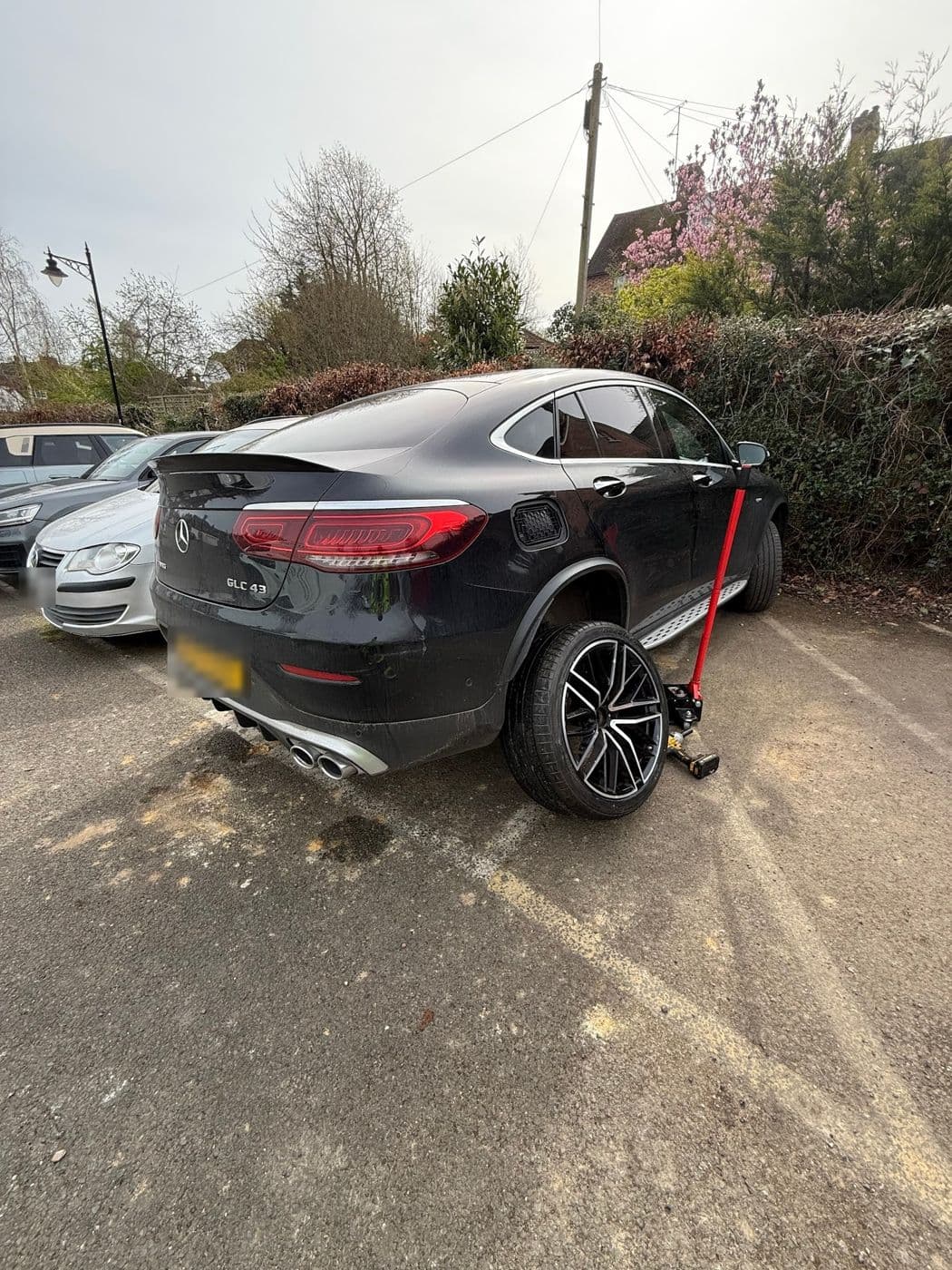
- What it is: Michelin says a bubble on the sidewall means the carcass ply behind the rubber has been punctured
- Usual causes: hitting a kerb or a pothole
- Can't be repaired: Pirelli says a bulge can never get back the tyre's original strength
- Against the law and an MOT fail: a bulge is listed as a dangerous defect
- The fix: a new tyre, in any brand and size, fitted at your car
What a tyre bulge is
Under the rubber of the sidewall is the carcass ply, which Michelin says helps contain the air pressure. A bubble on the sidewall means that ply has been punctured. Pirelli explains that once the rubber is damaged, air is pushed along the fibres and forms the bubble you can see.
Bulges can start small. Pirelli says they can get gradually bigger with time, so a small one is no reason to wait.
Don't confuse it with the slight ripples you sometimes see in a sidewall. Michelin says slight deformations are quite normal in radial tyres, the kind most cars use, and don't affect performance. A raised bubble that stands out from the sidewall is different. If you're not sure, send us a photo.
What causes a bulge in a tyre
Pirelli and Michelin name the same few causes:
- Kerbs. Michelin says driving onto a kerb, from the front or at an angle, can bring up a bulge on the sidewall. Pirelli adds that frequently hitting a kerb when parking is a cause.
- Potholes. Michelin says driving into a pothole can cause one too, and Pirelli warns that hitting potholes at speed can cause gashes.
- Over-inflation. Pirelli lists over-inflated tyres among the causes.
- An accident or a heavy impact, which Pirelli says can do substantial damage to the tyre's casing.
Can you drive with a bulge in your tyre?
Only as far as you need to, slowly. Pirelli calls a bulge a serious hazard if the tyre isn't replaced promptly, warns that the tyre could burst and you could lose control, and says high speed and sudden heavy braking make a blowout more likely. Its first advice is to stop and change to a spare if you can.
Michelin says a bulge usually brings abnormal vibrations, and that it's a sign your tyres should be checked urgently by a professional.
If the spare is a space saver, or there's no spare, leave the car where it's safe and call us: we fit a new tyre at the car, so it doesn't have to go anywhere on the damaged one. On a motorway, don't change the wheel on the hard shoulder; see flat tyre on the motorway.
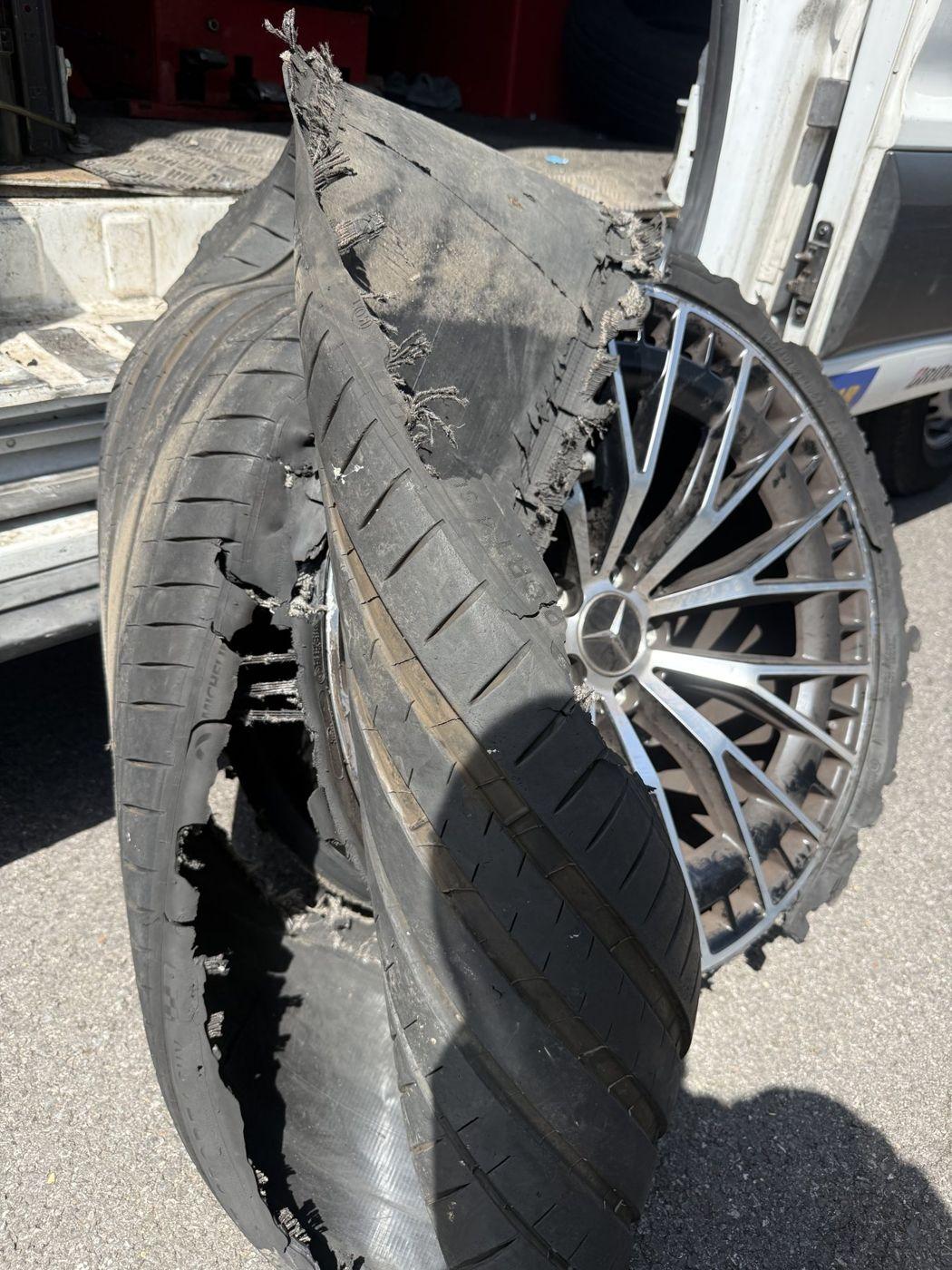
Can a tyre bulge be repaired?
No. Pirelli says it isn't possible to fix a tyre bulge safely, because the structure of the tyre is no longer stable, and that a fix is never recommended. TyreSafe's repair rules point the same way: repairs can only be made in the central three-quarters of the tyre, and damage close to or on the sidewall can't be repaired.
So a bulge always means a new tyre. Compare that with a nail in the middle of the tread, which can often be repaired, and how long a proper puncture repair lasts.
Is it legal to drive with a bulge in your tyre?
No. Regulation 27 of the Road Vehicles (Construction and Use) Regulations 1986 says a car can't be used on the road with a tyre that has any lump, bulge or tear caused by separation or partial failure of its structure.
It's an MOT fail as well. The MOT inspection manual lists a tyre with a lump, bulge or tear caused by separation or partial failure of its structure as a dangerous defect, and a cut deep enough to reach the ply or cords as a major one.
Other sidewall damage: cuts and cracks
A bulge isn't the only sidewall damage that means a new tyre.
- Cuts. Michelin says a deep cut may have damaged the carcass ply underneath, and that even a shallow one could get worse. A cut deep enough to reach the ply or cord is an MOT fail, and a sidewall cut can't be repaired.
- Cracks. Michelin says sidewall cracks are a sign of ageing and of exposure to sun and ozone, and a warning that the tyre is nearing the end of its life.
- Kerb scuffs. If a scuff has cut into the rubber, send us a photo and we'll tell you straight whether the tyre needs replacing.
Getting a new tyre fitted at the car
Send us a photo of the bulge and one of the tyre size on the sidewall on WhatsApp, with where the car is and your locking wheel nut details. You get a price and a real arrival time before the van leaves. In our core area we're usually with you in 30 to 60 minutes; further out, we tell you the real time when you call.
We fit a new tyre in any brand and size, at home, at work, in a car park or at the roadside, and take the old one away at no charge. The call-out is from £80, plus the tyre. The full breakdown is in what mobile tyre fitting costs.
- Not safe to drive, or stuck now: call or WhatsApp for emergency tyre fitting, 24 hours a day.
- Parked safely at home or work: book a time that suits you. A booked call-out costs less than an emergency one.
- Wondering whether to drive it to us? Don't; can you drive on a flat tyre? explains what that does. For any other tyre problem, start with what to do with a flat tyre.
Need it sorted now?
Emergency tyre fitting, at your car
FAQs
More questions
Anything else? Call us. It's quicker than reading.
Is a tyre bulge dangerous?
Yes. Pirelli warns that a bulging tyre could burst and you could lose control, and the MOT manual lists a bulge as a dangerous defect. Replace the tyre as soon as you can.
Can you repair a bulge in a tyre?
No. Pirelli says it isn't possible to fix a bulge safely because the tyre's structure is no longer stable. It needs a new tyre.
How long can you drive on a tyre with a bulge?
As little as possible, slowly, and only to somewhere safe. There's no safe distance: Pirelli says the tyre could burst, especially at speed or under heavy braking.
Will a tyre bulge fail an MOT?
Yes. A tyre with a lump, bulge or tear caused by separation or partial failure of its structure is a dangerous defect in the MOT inspection manual.
Can a pothole cause a tyre bulge?
Yes. Michelin says driving into a pothole can cause a bulge on the sidewall, and so can driving onto a kerb. If you've hit one hard, check the sidewalls and send us a photo if you see a bubble.

Flat tyre right now?
Call or WhatsApp. You'll get a price and an arrival time before we set off.